
Welcome!
For over 30 years, Mr An has been proud to bring the freshest ingredients, best service, and most individual atmosphere to the valley.
Mr An prides himself on every one of his restaurants and guarantees every single meal with the assurance of his name.
The name "Mr An" stands for quality and now his flagship restaurant bears this name:
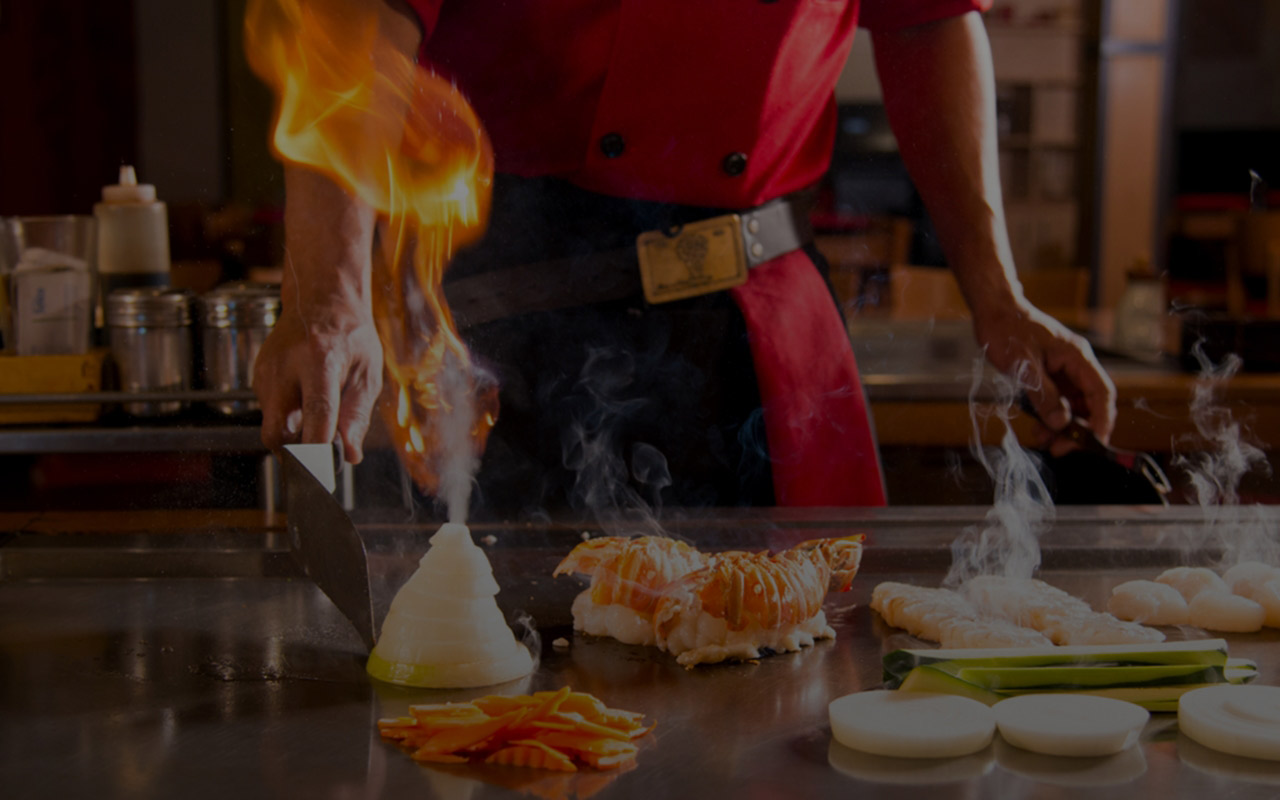
Mr An's Teppan Steak & Sushi!
"Mr. on the move"
Kwang C. An is standing on the sidewalk at the corner of East
Congress Street and Fifth Avenue in front of what will be his first
downtown restaurant. He's dressed all in black, his signature
shaved head and silver-rimmed eyeglasses reflecting the morning
sun.
A blue sedan makes a left onto Congress and the driver leans out
the window and waves. "Hey Mr. An," he shouts, "How are you?"
An doesn't know the man, but waves anyway. "Hello there!" he
replies as the car disappears.
This is not unusual for An, who is accustomed to strangers
greeting him like an old friend. Thanks to a string of low-budget
television commercials promoting the popular Sakura restaurant and
featuring former Arizona Diamondbacks player Luis Gonzalez (who An
calls his "No. 1 son"), the Korea native has become a household
name and one of Tucson's most recognizable faces.
An, who has a thick accent and sturdy build, enjoys his
celebrity.
"I think of myself, I'm nobody," he says. "But they really
recognize me and I feel good about it."
To many, An is the smiling father-figure who playfully teases
Gonzalez about his teppanyaki cooking ("No. 1 son Gonzo, you should
stick to baseball," he says in one commercial).
Others know him as a generous benefactor who spends countless
hours and dollars supporting The Community Food Bank, The Tucson
Girls Chorus and other causes.
But An's road to celebrity status has not been easy.
Poverty. War. Divorce. A tax evasion conviction. Four heart
attacks.
An, who turned 70 last month, has survived a lot. This is a
story about the "Mr. An" you don't know.
Growing Up
An was 5 years old when he got his first pair of shoes. Not wanting to get them dirty, he took them off before heading into the forest to play with his friends. When he returned, his shoes were gone. Somebody had stolen them. "Dad said my grandmother just beat the crap out of him when she found out," says An's oldest son, Bin An. When An was a boy, his father left the family to serve in the Korean War. An's mother packed their belongings on the backs of their ox and cow, and hiked her nine sons several hundred miles from Korea's war-torn north to the more peaceful south. There the family did what many Korean families did. They farmed - mostly rice. An grew up in a house without electricity or plumbing. The house sat on stilts and in the winter cold air seeped in through the rice paper door. When he turned 10, Kwang An started working to help feed the family. He sneaked onto trains and sold bubble gum, candy and cigarettes to the passengers. If caught, the conductor would beat him, confiscate his candy and money and throw him from the moving train. In the sixth grade, An left home to live with a wealthier family. He tutored their children and cleaned their house. In exchange, they paid for him to go to school. After graduation, An served three years of mandatory service in the South Korean Army. The military made him tough, he says, describing 25-mile runs up mountains carrying a heavy pack. "You not say, 'yes sir,' you going to be in big trouble," An recalls. "They beat you up to death, that kind of thing."
Coming to America
An was 31 and still living in South Korea when he married. The next year his wife gave birth to their first son, Bin. But the family wasn't together long. An met an American soldier in Korea who helped him land a job as a civil engineer with a construction company in El Paso, near Fort Bliss. The couple moved to Texas, leaving their infant son behind until they could establish themselves. "I got passed around between different uncles," says Bin An, now 36. Kwang An and his wife arrived in El Paso with $800. The first few years were a struggle; An says people were mean to him because he didn't speak English. Bin was 4 years old when he finally joined his parents. But the reunion was shortlived. Soon after the birth of their second son, Jun, An's marriage deteriorated. An says he's now convinced his wife was suffering from postpartum depression, a condition he didn't know existed at the time. After the divorce, An raised the boys alone. While he worked he left the kids with a baby sitter. With no car, he walked to and from the office daily - two hours each way. By the time he arrived home, he was exhausted. "Now I'm thinking back, in my lifetime what did I do best?" An says. "I think I did it best, I raised my kids. I don't dump my kids. I think I did it best. I feel so good about it." Even so, he cries when he thinks about the hard times in El Paso.
Tucson Transition
A visit from President Jimmy Carter to El Paso in the mid-'70s changed everything, An says. Carter made a stop at El Paso International Airport, where An was working as a construction supervisor. The next day, An was pictured in the local paper shaking Carter's hand. "A Tucson company saw that and they called and offered me a job," An recalls. Eager to leave El Paso, An accepted. He went to work for the McLaughlin Construction Co. One of the company's most recognizable buildings is the upside down glass pyramid at East Speedway and North Wilmot Road. But An wasn't finished with Texas. He had left the boys in El Paso with their baby sitter. He drove to see them every Friday after work, returning to Tucson on Sunday evenings. "He had two babies and was by himself," recalls longtime friend Jim Yeager, who worked with An. An found a way to make it work. He excelled at McLaughlin, then he and a friend struck out on their own, starting Reliance Construction Co. Eventually, Bin and Jun came to live with An in Tucson. Then, during a trip to Los Angeles, he met real estate agent Christina Won. The two hit it off and they were married three months later. Not long after that, they had a son, Kwang Chun An Jr. An credits Christina with helping him succeed in business. "She's really the main part of my success," he says. "Probably 70 percent."
The Restaurant Risk
An opened his first restaurant in 1983 after a disappointing trip to one of Tucson's few Asian eateries. Everything that night was bad - the food, the service, the cleanliness. An thought he could do better. Nevermind that he didn't have any experience running a restaurant, or even working in a restaurant. He bought Little Sicily Restaurant on South Craycroft Road near Davis-Monthan Air Force Base and expanded the building to three times its original size. The new restaurant, Great Wall China, thrived. Buoyed by its success, An decided to roll the dice with a second dining spot. In 1991, he opened Sakura, the restaurant that made him famous. The eastside eatery boasted multiple teppanyaki tables and capitalized on America's fascination with Japanese cuisine. It also benefited from some high-profile diners. In town for spring training, the Arizona Diamondbacks made Sakura their post-game hangout. "Shoot, I think I ate there every night for spring training," Luis Gonzalez says. "We were kind of inseparable. People made fun of us because I said, 'Yeah, he's my dad.'" It became fashionable to eat at Sakura and before long the walls were covered with photos of An posing with various athletes and movie stars. An says his favorite celebrities to dine at Sakura were two-sport phenom Bo Jackson, actress Kim Basinger, Suns owner Jerry Colangelo and White Sox owner Jerry Reinsdorf. Sakura's success led to a second Sakura on North Oracle Road, as well as three Phoenix restaurants, which he has since sold.
Business Savvy
Over the years, An has demonstrated a knack for anticipating the market. In the early 1980s, he moved away from construction and into the restaurant business. Around the same time, he also converted his construction company - he'd since parted ways with his partner and formed his own company, AHN Construction - to a janitorial business. "He'd built a ton of buildings for Duval Mine," Bin An says. "And he said, 'You know what? I'm going to start a janitorial service that cleans the buildings for them." Never one to stand still for long, An also opened a series of dry cleaning shops, called Polk Cleaners. The move away from construction came shortly before a sharp decline in the U.S. construction industry. In 2008, An sold the original Sakura to a Phoenix group headed by Yong Joo Lee. An named a price for Sakura that he thought would surely be rejected; the potential buyers didn't blink an eye - and agreed to pay cash. "I'm businessman. Except for my family, I can sell anything," An joked at the time. He also agreed to keep his celebrity and sports photographs in Sakura for three years. That was mere months before the recession hit. Now, with the economy showing signs of life, An has a new restaurant in a space that is very familiar to him. In 2005, An sold his second Sakura location, at 6091 N. Oracle Road, to Benihana Inc. But Tucsonans gave Benihana the cold shoulder and last year the international chain yielded the building back to An. "What Benihana found out in Tucson is Mr. An name stronger than Benihana name," An says. "I feel so good about it." An's new restaurant is the first to bear his name. Mr. An's Teppan Steak & Sushi boasts an outdoor patio with misters and several private rooms with teppanyaki grills. This fall, An plans to open a restaurant at Casino Del Sol on West Valencia Road. An says the Pascua Yaqui Tribe had been after him for a decade to open a restaurant at the casino. An Del Sol will serve Japanese and Chinese cuisine. "I'm not afraid of challenge," An says. He's also not afraid to repeat himself. In 2007, the Ans reopened Great Wall China at 2445 S. Craycroft Road, which they had sold to their longtime chef in 1991. But An's biggest roll of the dice is An Congress, his downtown restaurant and sports bar, scheduled to open next year. It will feature a 4,000-square-foot rooftop patio. The establishment is going up at the southwest corner of North Fifth Avenue and East Congress Street in a building owned by developer Scott Stiteler, An's business partner. An says Stiteler approached him about opening a restaurant downtown. Stiteler didn't want to say how much, but said he is putting "a sizable amount" of money into his downtown properties. An Congress was scheduled to open this fall before construction crews encountered a number of setbacks. The announcement of An's move downtown initially garnered bad press, thanks to the way some of the tenants were told they'd have to move. Emery Nicoletti, who owns Metropolis, a salon that had leased space there for 13 years, exchanged heated words with An and then-City Councilwoman Nina Trasoff at a press conference held the same day the tenants learned about the project. In the aftermath, a Facebook group, "Boycott Stiteler & Kwang C. An in Downtown Tucson" sprung up and quickly attracted nearly 1,000 members. Nobody has posted to the page since April. Preen vintage clothing store owner Erin Bradley says she is still mad at Stiteler for the way the situation was handled. But she doesn't blame An. "He's just the guy with the restaurant," she says. "Stiteler is the guy who owns the space."
Charity Work
An's father died soon after turning 50, and several of An's eight brothers passed away in their 50s. All succumbed to heart attacks. In 1997, at age 57, An had his first heart attack. He had subsequent heart attacks in 1999, 2000 and 2008. Doctors told him to exercise and take it easy, advice he's followed halfway. An wakes at 4:30 every morning to run on the treadmill and lift weights. Three mornings a week he meets with a personal trainer. An avid student of martial arts for much of his life, these days An sticks to western training methods. "I work out for a minimum one hour," he says. Taking it easy isn't in his nature. He tried golf, but didn't like it. "I can do a lot better things than chase a little ball all day long," he says. An throws himself into charity work. He is a member of the Pima County Board of Health, an honorary chairman of the Tucson Ladies Council, and a board member of the Community Food Bank. He's also raised money for the Tucson Girls Chorus. In December, An led an effort to assist the Food Bank with an event called "Miracle on Congress," in which the public left nonperishable food and money with volunteers during the one-week event. "He's probably one of the most compassionate, involved business people who we have in this community, says Bill Carnegie, president of the Food Bank. Bin An says his father's passion for charity stems from a desire to help people. "When he was growing up, he wanted so badly for somebody to help him," Bin says. "But nobody could." An's good deeds also stem from a desire to atone for his biggest mistake. In 1999, Kwang and Christine An pleaded guilty to tax evasion and were sentenced to three years supervised probation and ordered to pay $70,943.46 restitution and a $20,000 fine. An says his accountant misled him, and that these days he hires a much more expensive public accountant. "When I hire regular cheap bookkeeper I learned a lesson," he says. Bin An says his father's conviction was a shock. "I was a little disappointed," he says. "But none of us are perfect. I'm not a perfect son. When it happened, as a family we huddled together and we got through it." Kwang An is still trying to make good. "He feels like he let his family down and he also feels like he let Tucson down, and America in general," Bin An says. "He says that this is his home now. He's an American citizen and he wants to make things right and atone for what he did." An says he could retire, but he loves helping people. "They ask me, when you want to retire. I say, 'When six feet under ground.' I mean it. I love to work."
Mr. An Timeline
- 1940 - Kwang C. An born in Korea.
- 1972 - An moves to El Paso, Texas.
- 1973 - Bin An born.
- 1975 - An moves to Tucson.
- 1983 - An opens Great Wall China at 2445 S. Craycroft Road.
- 1988 - An marries Christina Won.
- 1991 - The Ans sell Great Wall China, and open Sakura at 6534 E. Tanque Verde Road.
- 1999 - Kwang and Christina An convicted of tax evasion.
- 2001 - An opens a second Sakura at 6091 N. Oracle Road.
- 2005 - The Sakura on Oracle Road is sold to Benihana Inc.
- 2007 - The Ans reopen Great Wall China.
- 2008 - Sakura on Tanque Verde Road is sold to a Phoenix group headed by Yong Joo Lee.
- 2010 - An opens Mr. An's Teppan Steak and Seafood Sushi Bar where Benihana used to be.
News
Mr. An's on Oracle at Rudasill is now Open!
Coming soon; AnCongress, a new Sports bar located at the heart of downtown Tucson
An Del Sol, located in the Sol Casino is now Open!
5655 W Valencia Rd.
Tucson, AZ 85757
(520) 838-7177
Sunday-Thursday 11am-10pm
Friday & Saturday 11am-11pm
An Del Sol website
Events
Happy Hour 5-7pm Monday - Friday
Live Music 6-11pm Friday and Saturday
Mr. An's Teppan Steak & Sushi
6091 N. Oracle Rd.
Tucson, AZ 85704
phone: (520) 797-0888
fax: (520) 797-0916
K.C. An
CEO
kc@mrantucson.com
Christina An
CFO
christina@mrantucson.com
Bin An
President
bin@mrantucson.com
Rona Chen
Office Manager
ronamran@gmail.com
Scott Montgomery
General Manager
scott@mrantucson.com
Employment Opportunities
jobs@mrantucson.com
Events
events@mrantucson.com
Website Administrator
info@mrantucson.com
About Sushi
More than just a food, sushi has become an art form enjoyed for its taste as well as presentation.
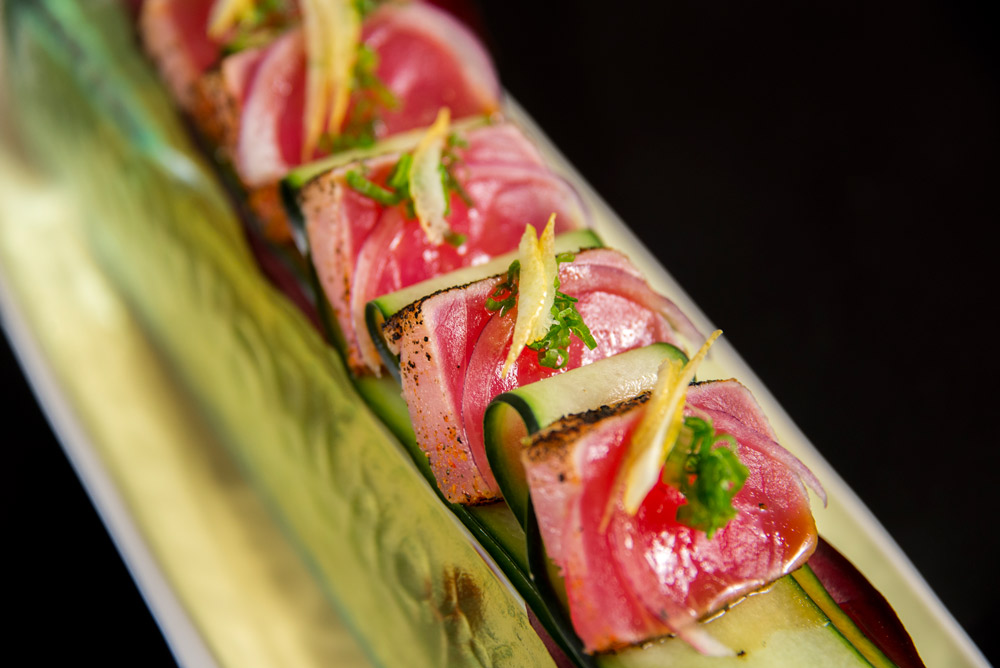
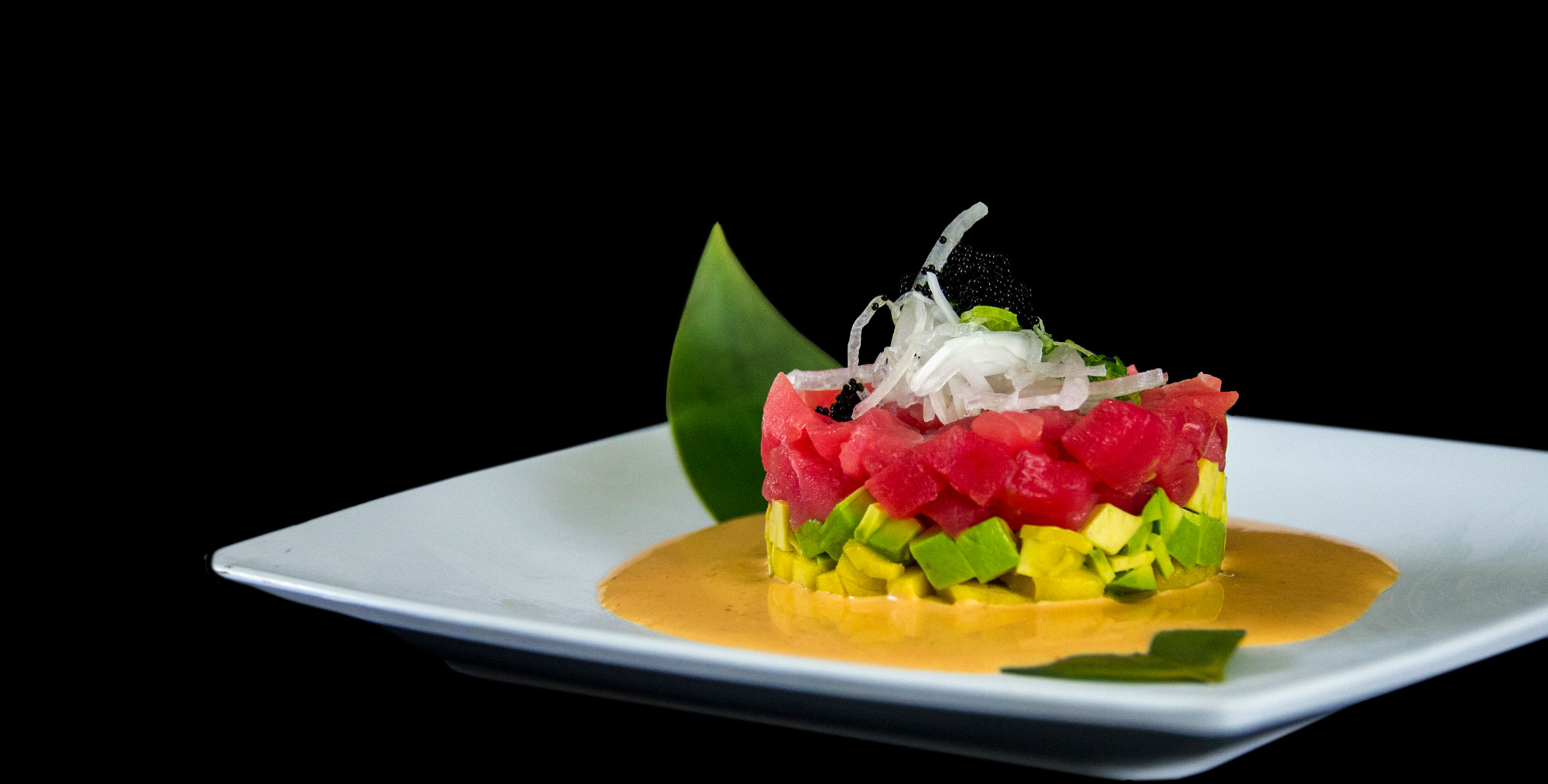
Mr. An may be famous for hibachi-style cooking, but we also feature a scrumptious sushi bar menu, with delicious fresh items including specialty rolls, which can be enjoyed as a meal or an appetizer.
The following information is just a brief overview of the sushi experience. New ingredients and types of sushi are being introduced every day, so don't be afraid to try something new!
How is sushi made?
- Sushi uses Japanese sticky rice seasoned with a sweet rice vinegar (a mixture of sugar and rice vinegar) as it is cooled and then adorned with raw fish, vegetables, Japanese omelet, or even barbequed eel (anago or unagi).
Some popular forms of sushi include: - Nigiri isthe most popular form of sushi, with various toppings are placed on top of a bite-sized rice base.
- Maki-zushi rolled sushi, made by rolling various fish and vegetable ingredients and rice into a sheet of dried nori by using a bamboo mat called a makisu. The roll is then cut into bite-sized pieces.
- Norimaki sushi rolls of rice, seafood, vegetables etc. rolled into nori.
- Te-maki "hand roll" style sushi, made by rolling a variety of ingredients into nori, usually smaller than some of the other roll types and shaped like a cone so that it is easy to eat with your hands.
- Chirashi-zushi this "scattered sushi" is a colorful sushi casserole typically served at home. Ingredients include cooled, vinegared rice and a variety of ingredients, from cooked and uncooked seafood, vegetables and omelets to pickled ginger and shredded nori. The ingredients are generally tossed with the rice or placed on top as a colorful garnish.
- Gunkan-maki sushi in which the nori is wrapped around the rice to create a sort of shallow dish. In this way, toppings such as sea urchin or salmon roe are contained on the top of the rice base and can be enjoyed.
- Hako-zushi sushi pressed in a box and cut into bite-size pieces. This type of sushi is most like the origins of sushi in which fish and rice were pressed and fermented in a box for many months before serving. Today, hako-zushi is not fermented but is served fresh.
- Inari-zushi deep-fried tofu pockets into which seasoned rice is stuffed.
- Nare-zushi the only form of sushi today that is still fermented, however only for a period of a few days.
What is Sashimi?
Sashimi is fresh, sliced raw fish, elegantly presented on a platter with a variety of colorful garnishes such as shredded daikon (giant white radish) and carrots, cucumber, seaweed, basil leaves and sometimes even edible flowers. Sashimi that is sliced thicker (about 1/2″) is typically eaten by dipping it into a mixture of soy sauce and wasabi (horseradish). Finely sliced sashimi is typically eaten dipped into a mixture of ponzu (citrus vinegar) and finely sliced scallions.
How are Sushi and Sashimi eaten?
There are basically two different ways to eat sushi. One is by picking it up with chopsticks and the other is by using your hand. In both cases it is important to only dip the fish side of the sushi into the sauce since dipping the rice side of the sushi into the sauce usually makes it fall apart. Since sushi is known for its very delicate flavor, it is important not to use too much soy sauce or the taste will be lost. Sashimi on the other hand is only eaten with chopsticks.
Condiments placed on the sushi platter, such as pickled ginger and wasabi, are eaten to refresh the taste buds between eating different types of sushi.
History of Sushi.
There is hardly a person alive today who is not familiar with Japanese sushi. Even though it has only been over the past 20 years that sushi has gained great popularity in the West, sushi in Japan is a traditional food which dates back over 1,000 years and is believed to have developed in Asia as a way of preserving fish. The fresh, raw fish was pressed between a mixture of rice and salt over a period of several months. As the rice fermented, lactic acid was produced which pickled the fish and kept it from spoiling. It is believed that this way of preserving fish was introduced to Japan from Asia at the same time that rice cultivation was introduced. The first evidence of sushi in Japan dates back to the Lake Biwa area in Shiga Prefecture where it was made from local carp. This sushi, called nare-zushi was fermented for about 2 months.
Traditionally the fish was eaten, however the rice was discarded until about the 15th century in Japan when it was decided that the rice was too precious to waste. This was the beginning of a kind of sushi that is still popular in Osaka called hako-zushi or "boxed sushi". However, it wasn't until the Edo Period (1603-1868) when sushi as we know it today was first developed. In 1824, Yohei Hanaya started the practice of serving fresh raw slices of seafood on bases of vinegared rice at his food stall located in the popular Ryougoku district of Edo (present day Tokyo).
Over the years, sushi stalls sprung up all over Tokyo, however they were banned after World War II by the Allied Occupation due to sanitary concerns. Gradually, these stalls gave way to the counter type Sushi restaurants that today have come to typify the sushi experience worldwide.
How to "speak" Sushi.
Here is a basic vocabulary of the items you may find at a well-stocked sushi bar.
- akagai - ark shell
- ama ebi - raw shrimp
- anago - sea eel
- awabi - abalone
- bakagai - round clam
- buri - adult yellowtail
- chutoro - in between fatty and lean tuna
- daikon - giant white radish
- ebi - cooked shrimp
- fugu - blowfish
- hamachi - young yellowtail
- hamaguri - clam
- hirame - fluke
- hotategai - scallop
- ika - squid
- ikura - red salmon roe
- kaibashira - sweet center of small scallop
- kaiware - sprouts of vegetables such as mustard greens or daikon
- kani - crab
- kanpyou - seasoned gourd
- karei - flatfish
- katsuo - bonito fish
- kazunoko - herring roe
- kohada - gizzard shad
- kuruma ebi - prawn
- kyuuri - cucumber
- maguro - tuna
- mekajiki - swordfish
- mirugai - horse clam
- natto - fermented soy beans
- nori - sheets of dried seaweed
- oshinko - Japanese pickles
- ponzu - citrus vinegar
- saba - mackerel
- shake - salmon
- shako - mantis shrimp
- suzuki - sea bass
- tai - sea bream
- tako - octopus
- toro - fatty tuna
- torigai - cockle
- uni - sea urchin roe
- unagi - eel
- wasabi - horseradish
- yaki tamago - Japanese omelet